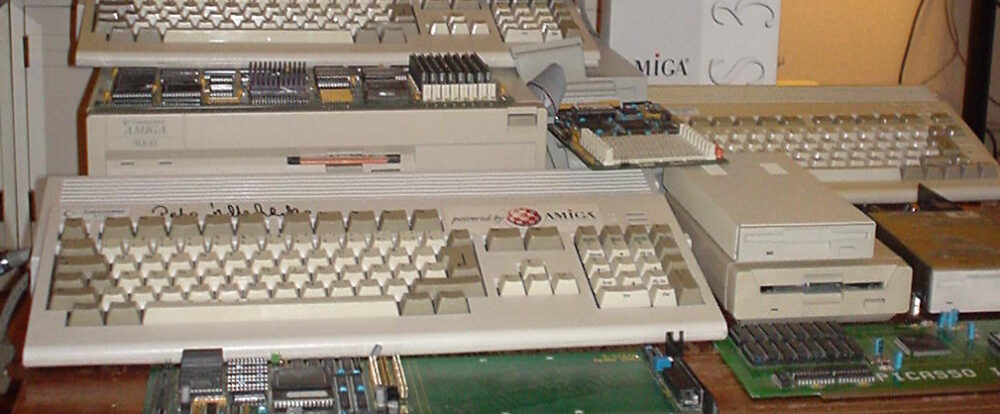
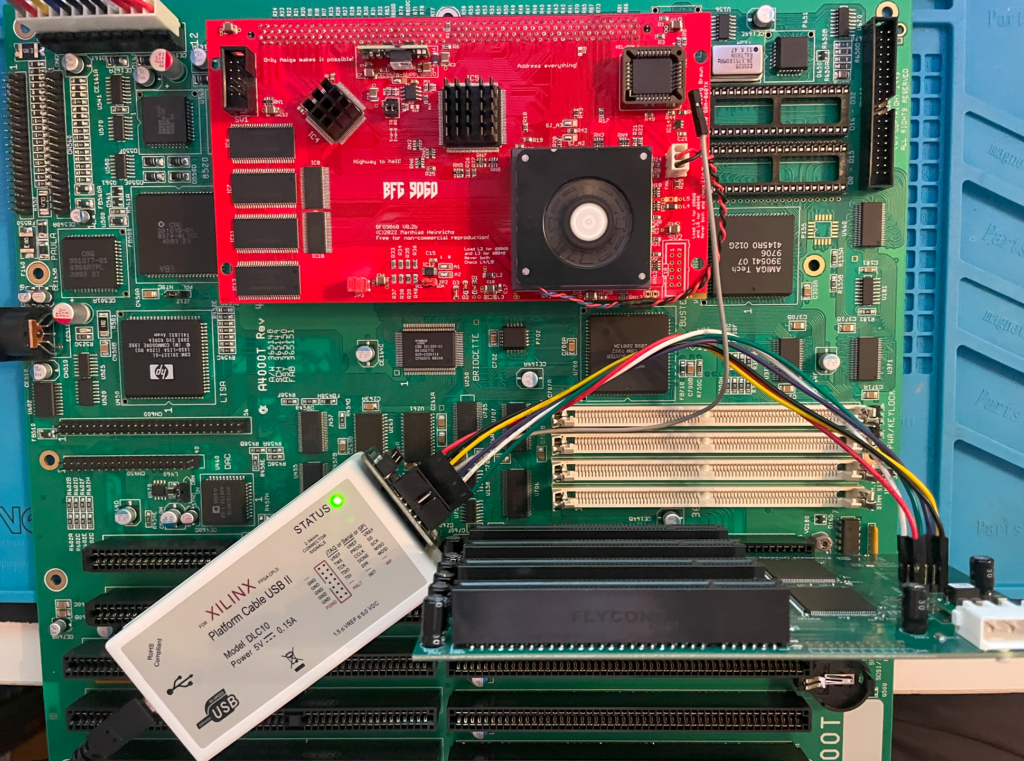
A lot of Amiga hardware projects uses programmable Xilinx chips, also called CPLDs, (Complex Programmable Logic Device). These chips are supposed to be programmed with logic.
Can you program a Xilinx CPLD with a Raspberry Pi?
Yes you can in most cases do that. Previously I have used a RaspberryPI as a programmer following the excellent guide Linux Jedi set up for programming a CPLD with an RPI. This has worked well, but I got stuck on a few projects where the RPI could not program the CPLDs.
Disadvantages and advantages of programming Xilinx CPLD with Raspberry Pi
The advantage of programming a Xilinx CPLD with a Raspberry Pi is that its a cheap programming solution that is fine for the occasional project that needs a CPLD programmed.
The disadvantage is that a Raspberry PI cannot program a Xilinx CPLD that has been write protected.
Many Xilinx CPLDs on eBay and AliExpress has already been programmed or are used and allready programmed.
It has happened to me that the chips I got from Chinese sources has been write protected which is a problem since you can not write to a write protected CPLD with an Raspberry Pi. The CPLD can not be unlocked with a Raspberry Pi.
Another disadvantage of programming CPLDs with a RPI is that there might be cases where the RPI can not handle the programming. I have seen that happen on projects that uses CPLDs from different makes in a JTAG chain.
Using a Xilinx DLC10 programmer instead
I got this DLC10 Xilinx programmer from AliExpress, as with most stuff there, this is probably just a fake or a clone of the genuine thing. As with most stuff there, it might nor might not work fine. But this programmer actually works fine.
As with most programmers there is a little learning curve in how to set up the software for the programmer. In this case the programmer software was in a virtual Linux installation that had to be run with VirtualBox.
I highly suggest googling for a tutorial on YouTube for learning how to program CPLDs with a Xilinx programmer to minimize confusion. Once programming a couple of chips it becomes second nature.
I had to use the USB2 port on my 12900k system, the programmer failed to work on the USB3 port.
Amiga projects with CPLDs that I programmed with my new Xilinx programmer
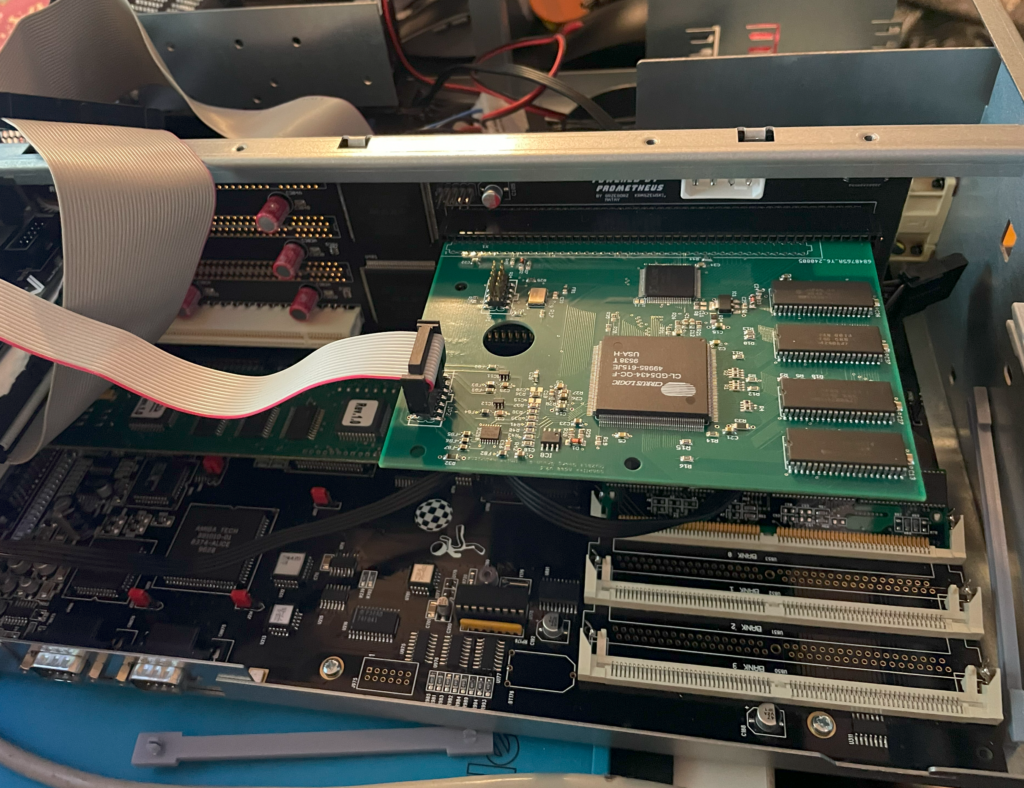
I had a couple of projects in my stash that was stalled because they refused to be programmed with a RPI. These where the Prometheus PCI daughterboard (had a CPLD that was write protected) and the BFG9060.
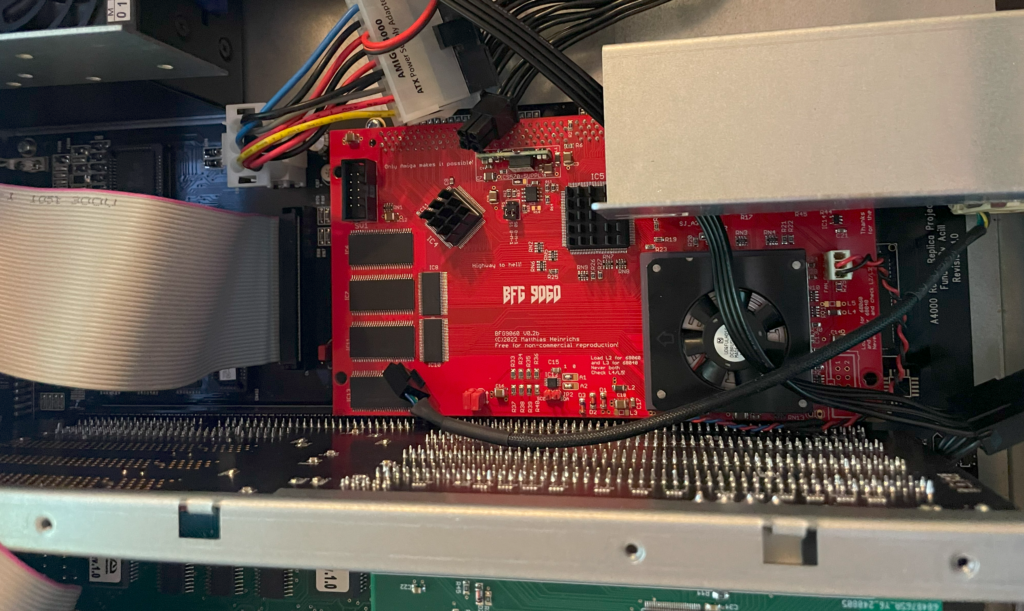
The second BFG9060 I built also had a CPLD that was write protected. All projects where programmed fine with the programmer.
It was very satisfying the be able to move on and close projects that has been in a state of limbo for close to a year!