Replica A3630 Amiga 4000 030 CPU card build

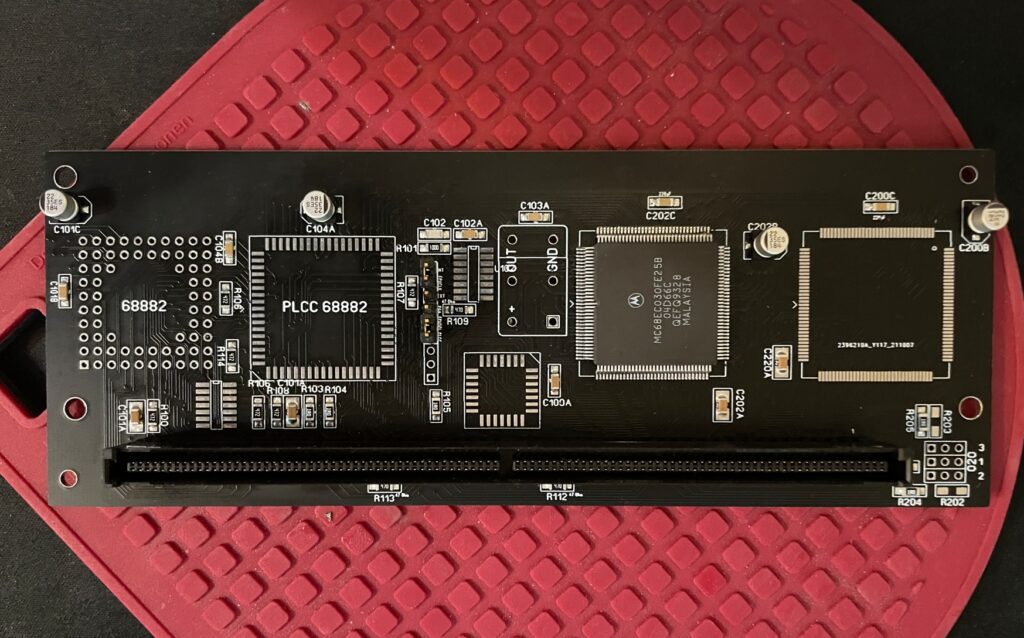
This is actually the underside of the A3630 030 CPU card

Today I built a replica of the A3630 030 CPU card. The A3630 CPU card came with non CR Amiga 4000D models (the card works on the A4000T and on the A3000D/T also). The CPU card replica PCB is made by Chucky, read more about it here if you are interested in getting one yourself!
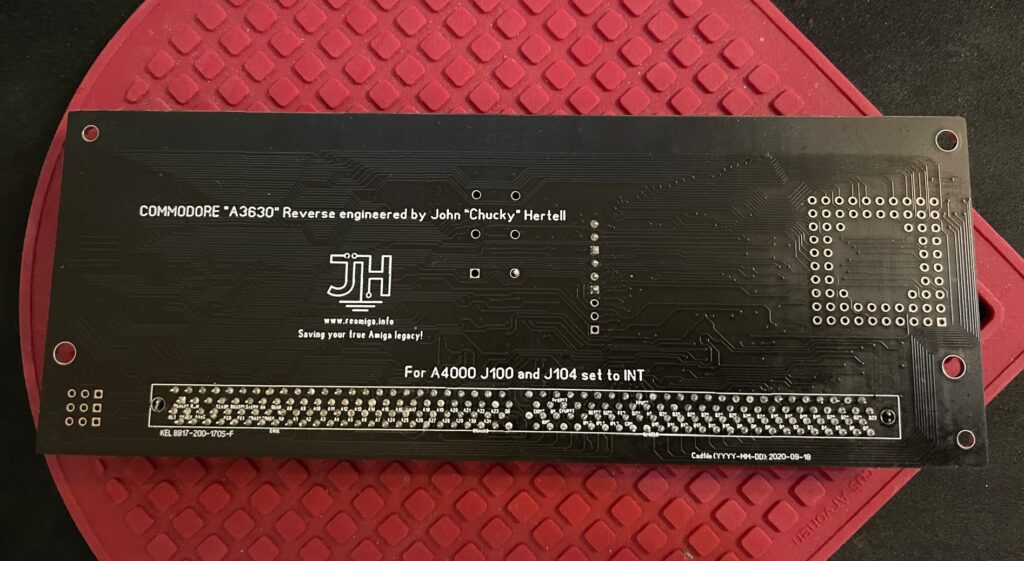
Top side of the A3630 contains no parts.

I got an (original Commodore made) A3630 in 2005, mainly for testing purposes. It was placed in storage for 15 years and I failed to check the capacitors on it. Sure enough the capacitors had leaked, the board had a fishy smell to it.

When I recapped the genuine C= A3630 board one solder pad lifted off the PCB (very common if capacitor have leaked for a long time). Sure, that is not a big issue, can be fixed quite easy with a bodge wire. But I thought rebuilding the A3630 it with a new ReA3630 PCB was a better option.

I decided to use the CPU and the KEL male edge connector from my current card instead of wasting a new mint in box unobtainium KEL connector from my stash on such a low end card. I removed the CPU from the card by using a hot air rework station. I used a desoldering gun to remove the KEL connector by desoldering each of the 200 solder points for it.

As you can see it is a quite simple card, especially if one do not mount the socket for the FPU. Since my main usage of this card is for testing purposes, the 33MHz FPU and crystal will be used on my ReA3000 instead.
Practice makes you perfect (when building an Amiga motherboard)

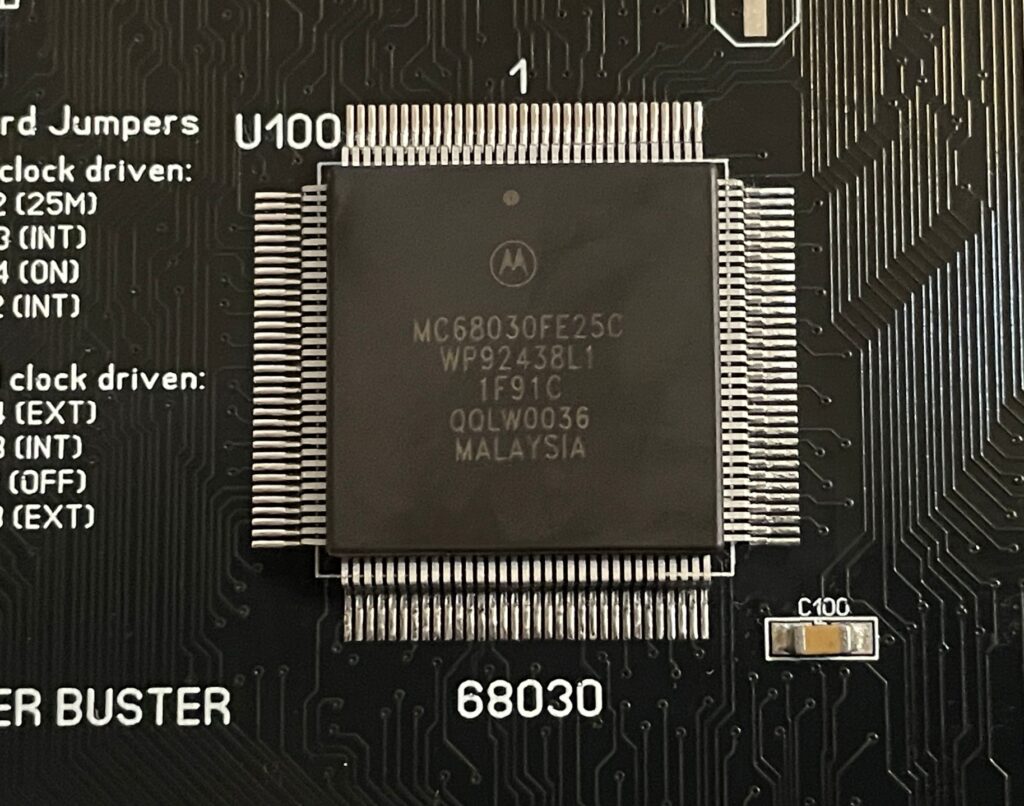
Motorola 68030 25Mhz on the A3000D motherboard (ReAmiga 3000 SMC version)

I am working on a ReAmiga 3000 motherboard. I am in no rush to finish it, taking it really slow ordering one set of parts at a time. Last week I got the 68030 so I decided to solder it on the motherboard this weekend. Hopefully I will be able to do a test drive before Q1 is over!

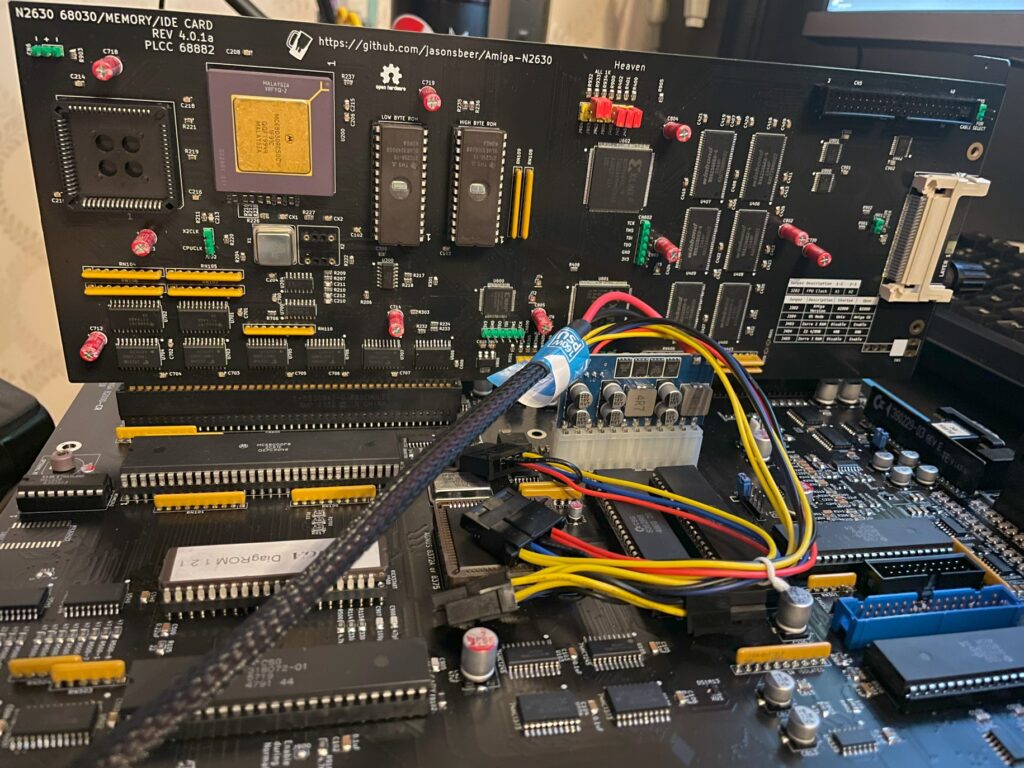
n2630 68030/Memory/IDE card for the Amiga 2000 (EATX)

I built my second Amiga 2000 EATX last year, it is a beautiful clone of the Amiga 2000 remade into a standard extended ATX format so it can fit a standard EATX case. You can be sure that I will add an article about that motherboard here in the future. The author of that project has also made the n2630 project, its a clone/reimplementation of Commodores 030 card for the A2000, the Commodore A2630.

To be honest, I wish there was a modern 060 or 040 card we could build for the A2000 since I think 030 is just too slow these days – at least for my modern Amiga standards. To be fair while the A2630 was 25 Mhz this one runs at 50 Mhz, so its a little bit faster. 040 runs so hot, but would be a perfect fit for the A2000EATX because of the improved case airflow (and having an 040 in one of my machines could be interesting to compare performance with 060 machines).

Anyways, I should be glad with what I have and I am thankful that we can build this cool modern 030 card for our A2000 computers. And the n2630 is such a nice compliment to the A2000 EATX motherboard having IDE/CF slot built in.

Building the n2630 for my A2000EATX

I decided to build my n2630 card earlier this year with 128 MB fast memory. There was an option to go for 256 MB fast memory also but thought it was not really worth it, maybe I will regret it in the future. Otherwise this build was very straight forward. It uses three CPLDs and six memory chips.

There was some parts that was difficult to find, first it was the 030 CPU socket. I actually got the parts number for one that was availble on Mouser after asking around, surprised about that. The CF slot at the back of the card needs to be the right one to fit solder points on the board, ask on the Discord if you wondering what type you should get if you are building one. Other than that it was an easy build. There are also two eproms you need to have and program, but as usual, most stuff that is rare can be found with some patience.

I have since mounted an FPU to the card and I also got a 3D printed bracket so I could secure it in my regular ATX tower that was converted to EATX. I ran out of black pin stripes that is why I used yellow and green (it was also a joke about obsessing over the color syncing of hardware).