Indivision ECS V4 Amiga scandoubler

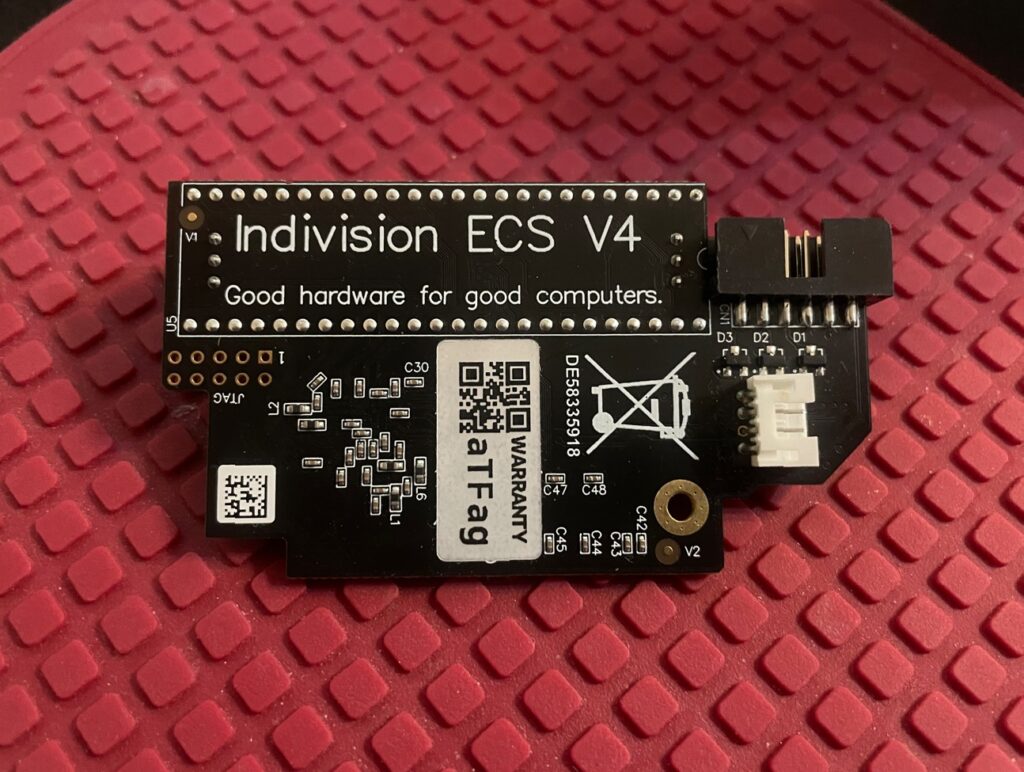
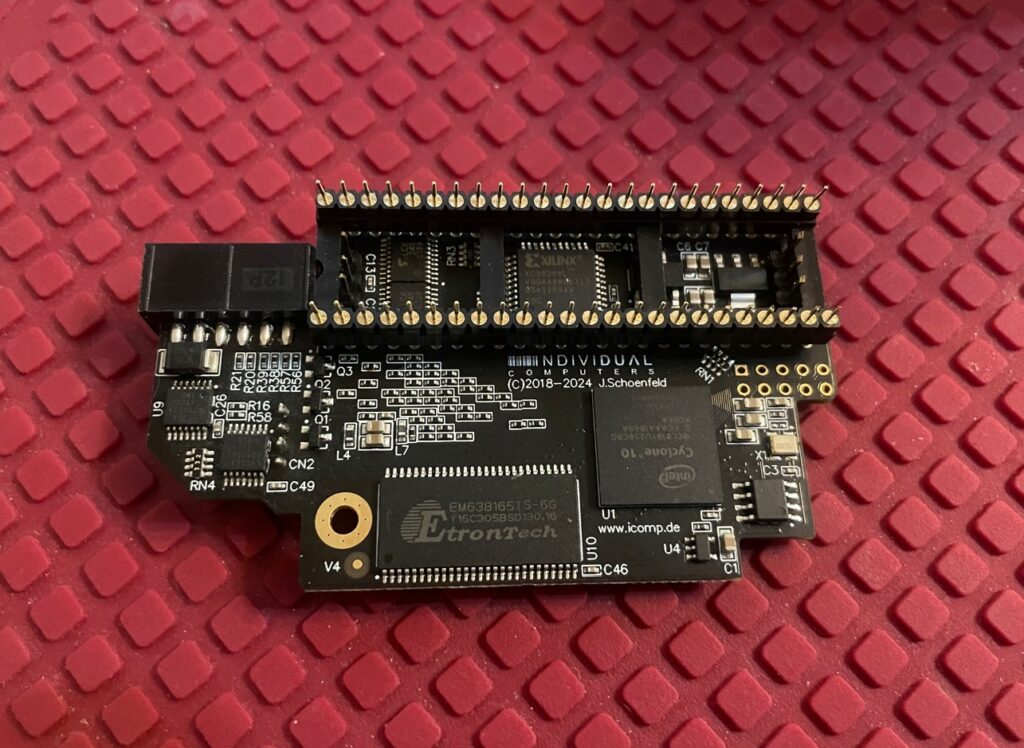
Top picture of the Indivision ECS V4 Amiga scandoubler

I had the opportunity to add a second hand Indivision ECS V4 scandoubler to my collection of Amiga hardware this week.

I am familiar with the Indivision family of scandoublers for the Amiga, the first one I had was the Indivision MK1 AGA for the Amiga 1200 more than 15 years ago. I was very happy with that one.

Currently, I am running an Indivision AGA MK3 in my Amiga 1200 and an Indivision ECS V3 in one of my Denise Amiga clones. Being able to hook up a standard HDMI or VGA screen to another one of my Amiga computers is a real luxury.

I have always thought that not being able to view all Amiga screen modes on a VGA monitor without any expensive hardware was one of the Achilles heels of the Amiga. In my “must have list” for an Amiga computer, a scandoubler is a necessity and not an optional extra.

That perhaps explains why in my current hardware stash I now have 6, now 7 scandoublers.
Bottom picture of the Indivision ECS V4, it is a bit more busy

The elephant in the room is off course RGB2HDMI. But I think, untill there is a good solution for auto switching between two HDMI ports (scandoubler/P96) and untill there is an affordable/open hardware HDMI graphics card I prefer VGA. Because…

The picture quality from the Indivision is really good. As someone on an Amiga discussion forum described it, “it looks like an emulator”. And…

If you take the time, and really invest a chunk of time into reading the setup manual, you can even configure them to display an even better image on your specific monitor.
Another Mini version of GBAPII++ built and tested

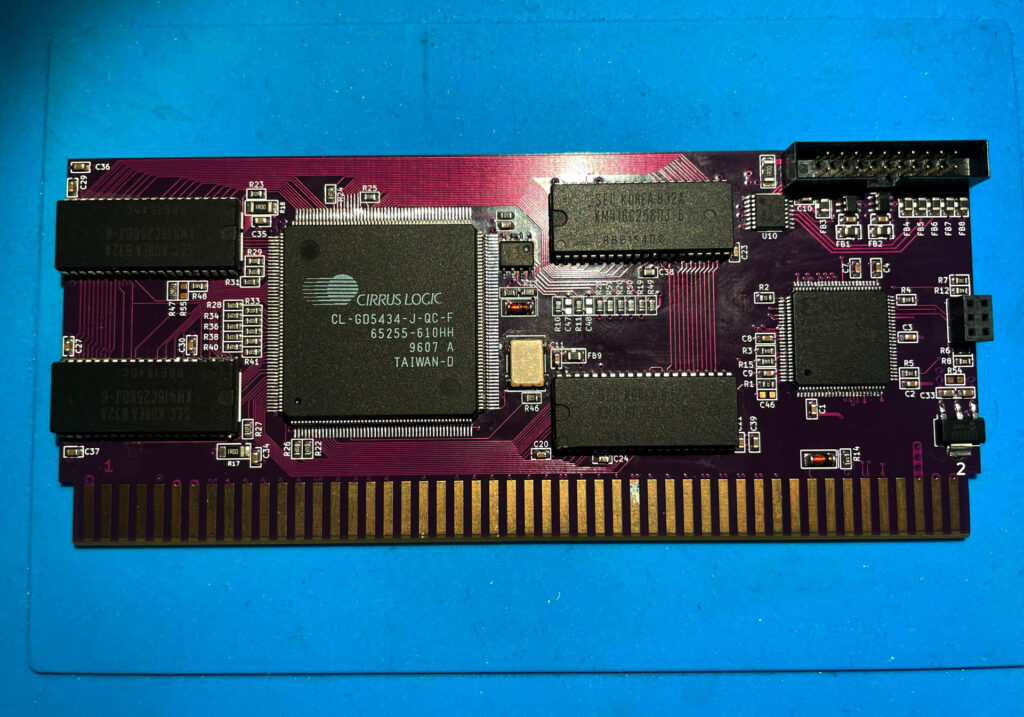
I got the opportunity last year during fall to purchase a GBAPII++ mini graphics card with all passives already mounted. Only thing it did not have was the Cirrus Logic chip, memory chp and the CPLD (and some small components). The mini version of the GBAPII++ is the same card functionality wise as the regular one. You can read about the regular GBAPII++ here, you can read about the mini version of the card here.

As I was going to build the regular version of the graphics card in parallell I got lazy when I put together the BOM and assumed that the voltage regulator was the same for both of the cards. I was wrong, the GBAPII++ mini uses another voltage regulator, which explains why I could not program the CPLD and why the voltage regulator was running very hot on the card once I had built it.

Having received another shipment of components from Mouser late last year in December with the correct voltage regulator, I was anxious to find out if I had fried the card or if it was going to work. Happy to tell you the card in the picture is working fine after I swapped the voltage regulator to the correct one!

Whats the point of such a small Amiga graphics card?

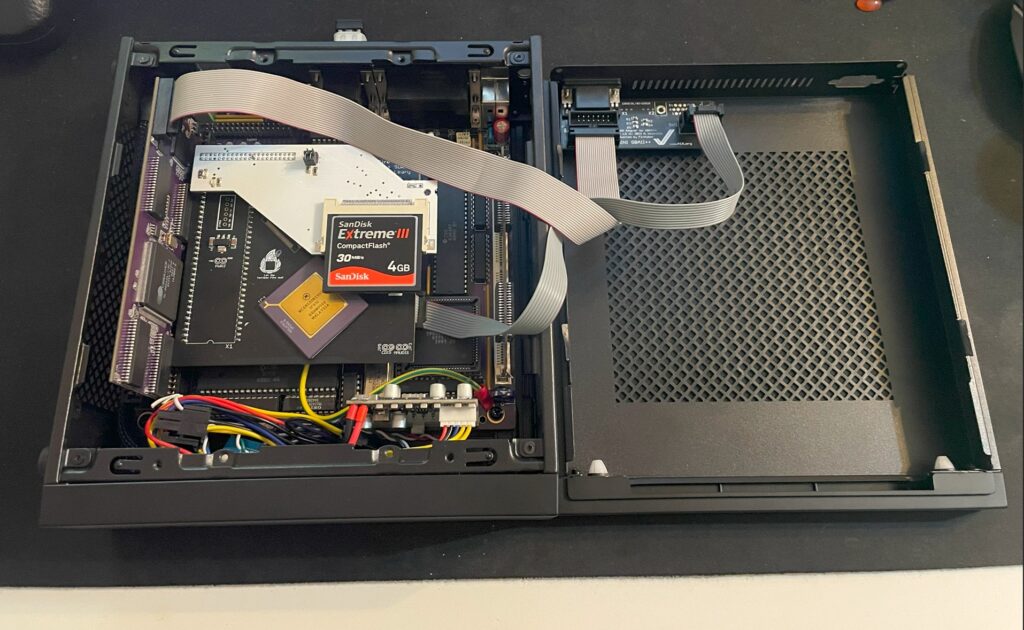
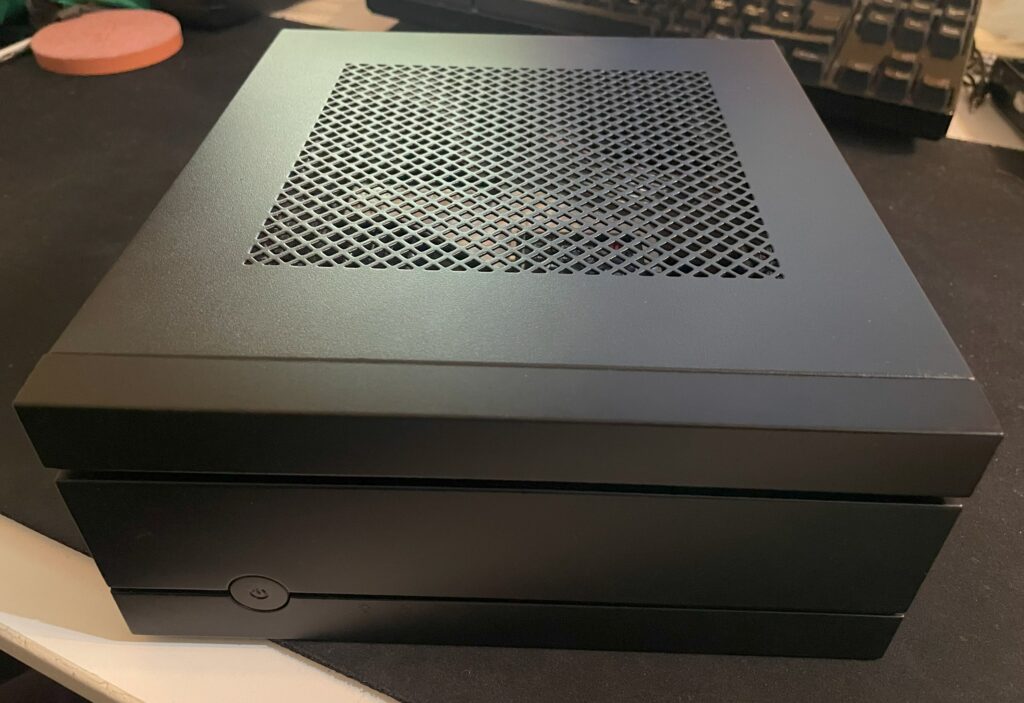
I use my other GBAP2++ mini card in my Mini-ITX Amiga Denise but I think I will use this one in another big box Amiga. As you can see the Denise is installed in a very low profile case – The tiny card makes it possible to use a small case. If anyone is wondering what case I am running, it is a Chieftec IX-01B Mini-ITX case but it has the CD/DVD addition stacked on top of it to make room for the graphics card (Chieftec MK-35DV).

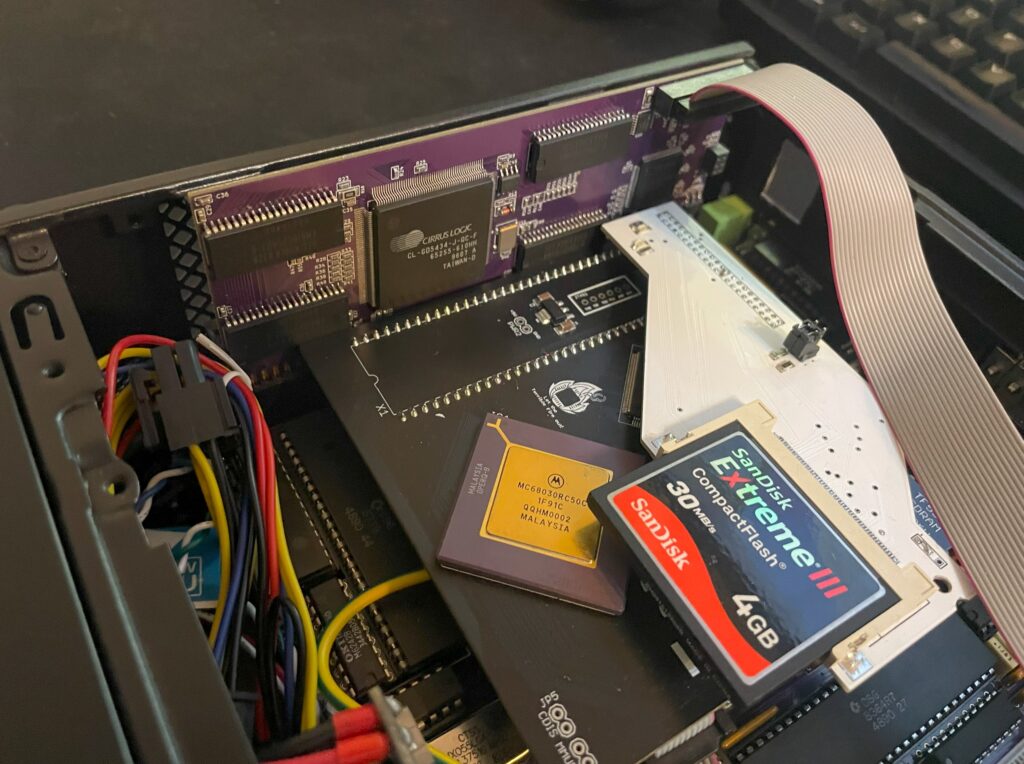
This Amiga is based on the Denise Mini-ITX A500+ clone motherboard. It has a TF356 68030 turbo card with 64MB memory, a 4 GB CF card and an Indivision ECS MK3, it also has a GBAP2++ mini graphics card. The video output from the VGA connector is beautifully switched from native ECS to P96 output (and vice versa).

Here is another closeup of the card running fine in my Denise Amiga clone.